

WhatsApp Groups and School Bullying: The Blind Spot in Prevention
WhatsApp groups and school bullying: with the widespread use of smartphones from the start of middle school, WhatsApp groups have become a natural extension of school life. Originally created to share homework or organize activities, they are now one of the main vectors of cyberbullying in schools. Yet these digital spaces are largely ignored or underestimated in prevention policies. Invisible to adults and private by nature, they represent a true blind spot in the fight against bullying.
WhatsApp Groups: An Unsupervised Playground
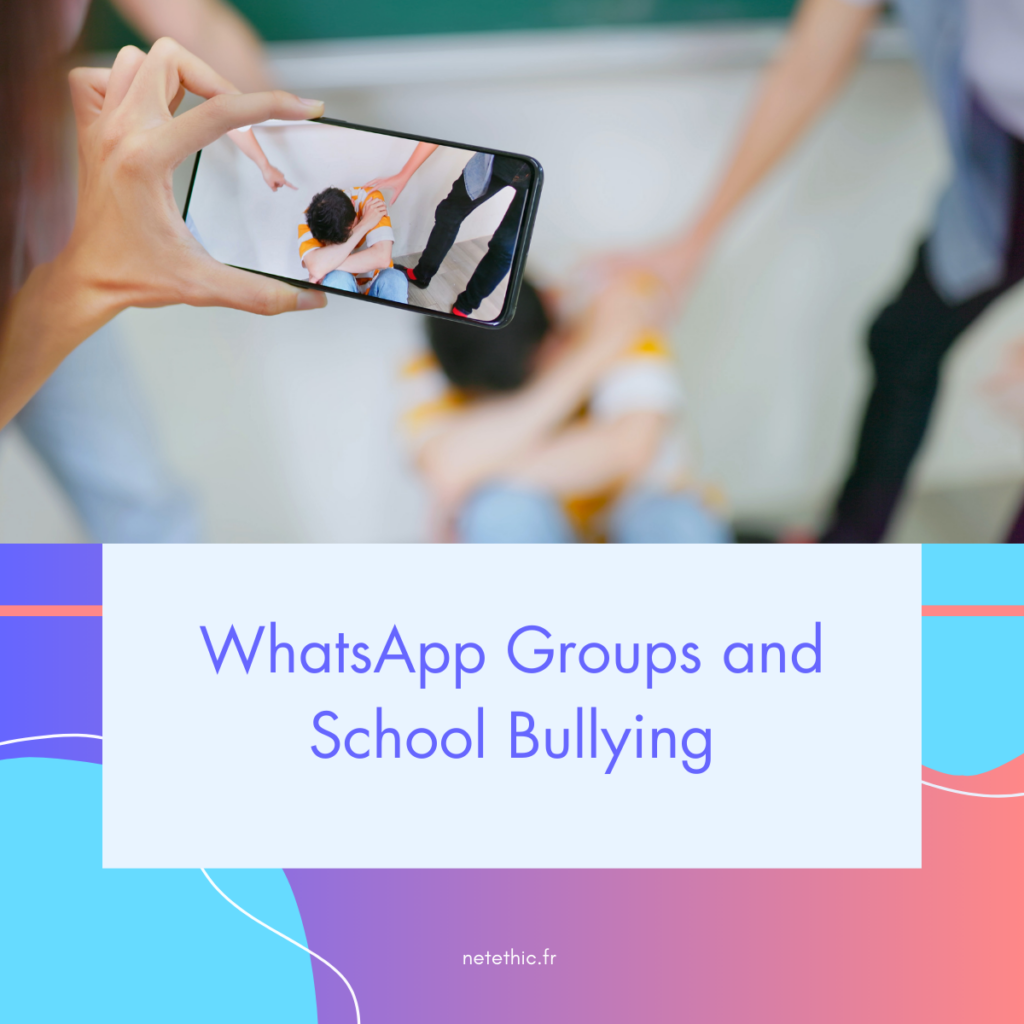
Unlike public social networks, WhatsApp groups operate as closed spaces. They give the illusion of an intimate, secure environment reserved for peers. In reality, they often become a permanent digital playground, accessible 24/7.
Within these groups, one frequently observes:
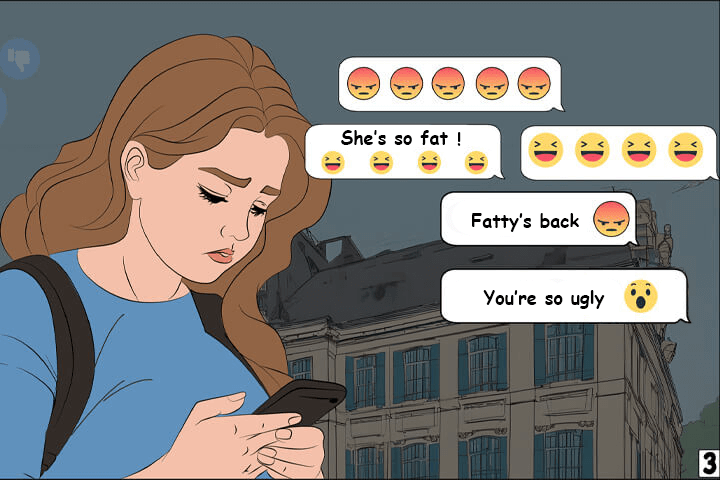
repeated mockery;
humiliating nicknames;
deliberate exclusion (removing a student from the group);
screenshots shared without consent;
sexist, racist, or degrading remarks.
The violence is all the more destructive because it leaves the victim with no respite.
Why Bullying Is Amplified on WhatsApp
The very way these groups function encourages harmful behavior:
group effect and conformity;
a multiplication of silent bystanders;
absence of adult mediation;
speed and permanence of messages.
Laughter, emojis, or reactions act as social validation for the attacks. A humiliating message can be read by dozens of students within seconds, reinforcing the feeling of shame and exposure.
Unlike a one-off dispute, cyberbullying unfolds over time and leaves lasting traces that are difficult to erase psychologically.
Violence That Is Difficult to Report
Many children do not dare to talk about what they experience on WhatsApp. Several reasons explain this silence:
fear of being labeled a “tattletale”;
fear of escalation;
feeling that adults “won’t understand”;
the impression that the violence is “not serious enough.”
Moreover, adults are often at a loss: they do not see the messages, are unaware of the group’s internal dynamics, and hesitate to intervene in what is perceived as a private sphere.
The Myth of Individual Responsibility
Prevention still too often relies on an individual-focused approach: “block,” “leave the group,” “turn off your phone.” These solutions shift the responsibility onto the victim and ignore the collective dimension of bullying.
Leaving a school WhatsApp group often means:
cutting oneself off from important information;
reinforcing social exclusion;
confirming the aggressors’ dominance.
The problem is not the tool itself, but the collective use and the implicit norms that develop within it.
The Crucial Role of Parents and Schools
School WhatsApp groups require shared vigilance. Parents need to be informed about the risks without resorting to intrusive monitoring. The goal is to create a space for dialogue where the child feels safe to speak up.
Schools, for their part, can no longer ignore these spaces simply because they are digital. Cyberbullying is fully part of school bullying, with real consequences for mental health, absenteeism, and dropout rates.
Some effective practices include:
dedicated digital awareness sessions;
collective rules for school groups;
bullying coordinators trained in cyberspace issues;
clear cooperation with families.
Towards Prevention Adapted to the Real Digital World
Ignoring WhatsApp groups allows invisible violence to thrive. Prevention must take into account the digital reality of students as they experience it daily. This requires acknowledging that bullying does not stop at the school gates and that the digital world is not separate, but an extension of school social life.
Conclusion: WhatsApp Groups and School Bullying
WhatsApp groups have become a central part of students’ social lives, but they also create a blind spot for bullying prevention. The closed, persistent, and fast-moving nature of these digital spaces amplifies harassment and makes it harder to report. Effective prevention requires a collective approach: informed and supportive parents, proactive schools, clear rules, and open dialogue with students. Recognizing the digital dimension of school life is essential to protecting children and addressing bullying where it actually occurs.