


The Role of Teacher Emotional Support in Preventing School Dropout
Teacher Emotional Support: School dropout represents a major challenge for contemporary education systems. According to INSEE and the French Ministry of National Education, around 10% of young people leave the school system without a diploma in France. Beyond socioeconomic factors, research shows that teacher-provided emotional support is a crucial lever for preventing dropout and enhancing student engagement. This article explores the scientific and psychological role of teachers as emotional supporters, as well as effective pedagogical practices.
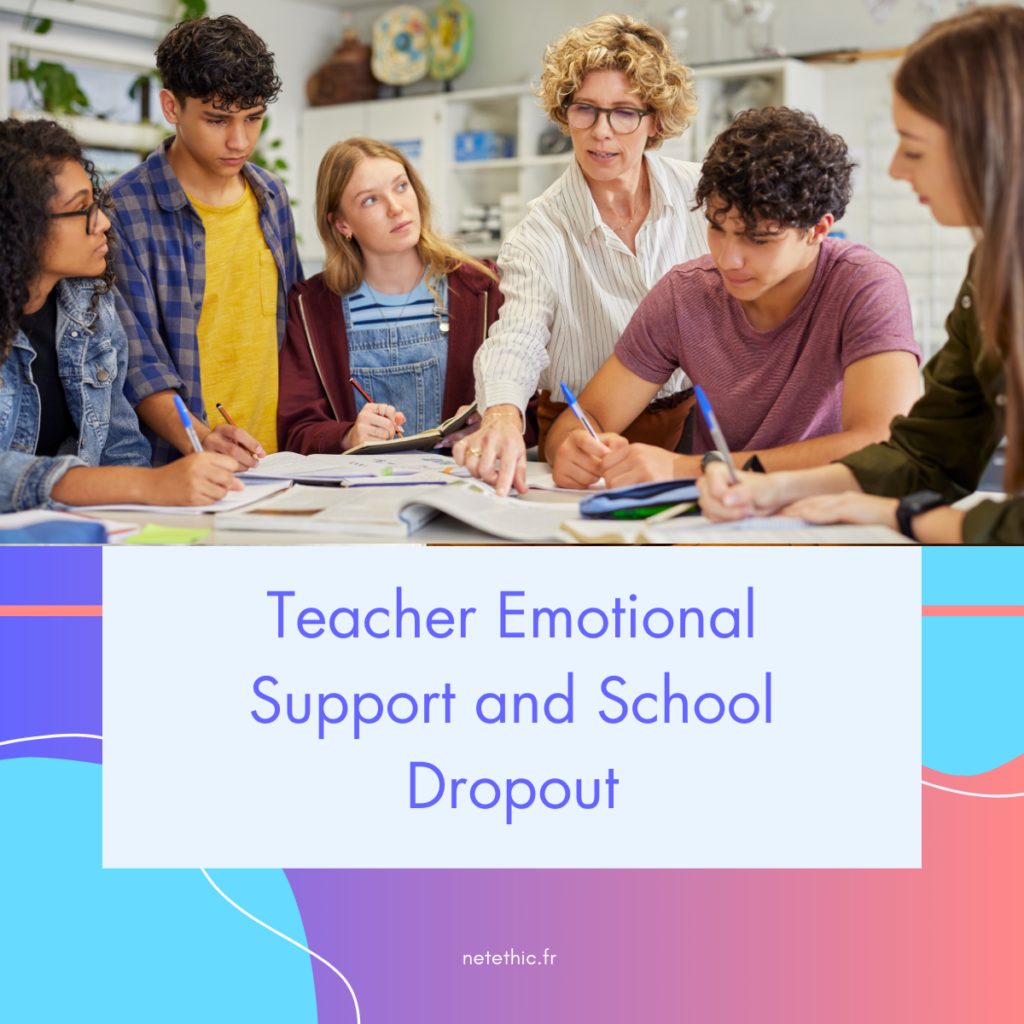
Definition of Teacher Emotional Support
Teacher emotional support encompasses several dimensions:
Emotional availability: Being attentive to students’ emotional needs and personal challenges.
Constructive feedback: Recognizing effort and providing specific, individualized encouragement.
Trusting and respectful climate: Establishing a safe relationship where students feel comfortable expressing doubts and emotions.
This type of support is not merely about kindness; it has measurable effects on students’ motivation, perseverance, and resilience.
Scientific Evidence of the Impact on School Dropout
A meta-analysis of 25 international longitudinal studies showed that students perceiving high emotional support from teachers were 35% less likely to drop out. The underlying mechanisms include:
Reduction of academic stress: Emotional support alleviates anxiety related to exams and assessments.
Strengthening school engagement: Feeling supported encourages active participation and initiative.
Improvement of resilience: When facing failures or difficulties, students maintain motivation to continue their studies.
Field Studies
French research conducted in REP+ middle schools has shown that teachers who invest in positive relationships with their students can offset certain vulnerabilities related to family or social environment. For example:
At-risk students (low self-esteem, behavioral issues) show significant improvements in grades and attendance when teachers apply emotional support techniques.
Regular mentoring by a designated adult reduces the risk of prolonged absenteeism and dropout by 20%.
Effective Pedagogical Practices
To maximize the impact of emotional support, several strategies have been identified:
Individual mentoring and tutoring: Regular interactions to identify difficulties and provide tailored follow-up.
Positive classroom climate: Establishing clear rules, promoting cooperation, and managing conflicts constructively.
Teacher training: Programs focused on emotional intelligence, stress regulation, and early detection of dropout signals.
Constructive feedback and intrinsic motivation: Recognizing effort, not just results, to encourage sustained engagement.
Limitations and Perspectives
While emotional support is crucial, it is not sufficient on its own. Family, socioeconomic, and institutional factors also play a determining role. An integrated approach that combines emotional support, academic guidance, and social support measures appears to be the most effective strategy for reducing school dropout.
Conclusion
The role of teachers goes far beyond transmitting knowledge: their ability to provide emotional support to students is a key factor in preventing school dropout. Scientific research confirms that well-targeted interventions, based on the teacher-student relationship, can enhance engagement, motivation, and academic achievement. Educational policies should therefore integrate this psychological dimension to build more inclusive and resilient educational pathways.