Netéthic Solution logicielle de lutte contre le cyberharcèlement scolaire

Netethic Technical Glossary

Lexical fields closely related to school violence and toxic behaviors

A

Active bystander

Person who reports or intervenes to stop an act of harassment, contributing to the regulation of the school climate.

Aggressiveness

Verbal, physical, or symbolic behavior aimed at harming or intimidating others. May precede or accompany an act of bullying.

B

Brimades

Actes humiliants répétés, souvent banalisés ou déguisés en plaisanteries, mais générant un fort impact psychologique.

Bystander Effect

A social psychological phenomenon in which individuals are less likely to offer help to a victim when other people are present, often unintentionally reinforcing the aggressor's power.

Bystander Effect

A social psychological phenomenon in which individuals are less likely to offer help to a victim when other people are present, often unintentionally reinforcing the aggressor's power.

Auto-dépréciation

Discours ou attitude d’un élève se dévalorisant de manière répétée, souvent après une exposition prolongée à des violences psychologiques.

C

Cyberbullying

Form of harassment carried out through digital tools (messages, social networks, forums, online games) including insults, threats, or the sharing of humiliating images.

Cyberviolence

Any act of intentional violence committed through digital tools: insults, threats, blackmail, doxing, sharing of non-consensual images.

D

Degraded school climate

Environment where interactions between students and adults are characterized by a lack of respect, safety, and kindness.

Degrading remarks

Offensive remarks that challenge a person's dignity or worth.

Denigration

Repeated remarks aimed at belittling, ridiculing, or delegitimizing a person.

Discrimination

Unfair treatment based on appearance, origin, gender, disability, or orientation.

Double Bind

A situation in which a person receives conflicting messages or commands, such that any response results in a "wrong" outcome for the victim.

Degrading remarks

Offensive remarks that challenge a person's dignity or worth.

Denigration

Repeated remarks aimed at belittling, ridiculing, or delegitimizing a person.

Discrimination

Unfair treatment based on appearance, origin, gender, disability, or orientation.

E

Emotional management

Ability to recognize and regulate one’s emotions to avoid aggressive or impulsive reactions.

Escalation of violence

Progressive increase in the severity of aggressive behaviors, moving from verbal to physical or digital forms.

Exclusion group

Subgroup of students that controls social relationships and systematically excludes certain peers.

Educational Alliance

Close cooperation between parents, teachers, and students to ensure a safe and supportive learning environment.

F

False testimony

Deliberate spreading of false information to harm a classmate’s reputation.

Discrimination

Traitement injuste fondé sur des critères d’apparence, d’origine, de genre, de handicap, ou d’orientation.

G

Group dynamics

Collective interactions that can strengthen solidarity or, on the contrary, intensify power relations and exclusion.

Group loyalty

Tendency to protect a group one belongs to, even in cases of unfair behavior, hindering the reporting of bullying.

Gaslighting

A form of psychological manipulation that seeks to make the victim doubt their own memory, perception, or sanity.

Discrimination

Traitement injuste fondé sur des critères d’apparence, d’origine, de genre, de handicap, ou d’orientation.

I

Intimidation

Act of pressure, threat, or aggression intended to instill fear or assert power.

Isolation

Exclusion of a student, voluntary or imposed, often as a result of continuous bullying.

Harcèlement social

Exclusion, rumeurs, isolement ou manipulation du groupe pour nuire à une personne.

M

Microaggression

An apparently innocuous remark or gesture that is denigrating or exclusionary, often related to stereotypes.

Harcèlement social

Exclusion, rumeurs, isolement ou manipulation du groupe pour nuire à une personne.

O

Ostracism

The deliberate exclusion of an individual from a social group or activity.

Harcèlement social

Exclusion, rumeurs, isolement ou manipulation du groupe pour nuire à une personne.

P

Passive bystander

Witness to an act of harassment who does not intervene, unintentionally contributing to the maintenance of the toxic behavior.

Passive form of bullying

Indirect participation of a bystander who, through silence or inaction, reinforces the aggressor’s position.

Peer pressure

Peer pressure that encourages the adoption of violent, exclusionary, or unethical behaviors.

Psychological violence

Words, attitudes, or behaviors aimed at humiliating, demeaning, or controlling a person without physical contact.

Psychological impact

Emotional or cognitive consequence of an act of violence: anxiety, loss of self-esteem, sleep disturbances, etc.

Psychological harassment

Continuous psychological pressure aimed at weakening, isolating, or humiliating a person.

Physical harassment

Repeated bodily violence (shoving, hitting, threatening gestures).

Psychological fatigue

Emotional exhaustion caused by pressure, mockery, or prolonged exposure to toxic situations.

R

Rumor

False or distorted information circulating within a group, often used to discredit a person.

Resilience

Ability to recover psychologically after a situation of violence or humiliation.

Relational toxicity

Recurrent interaction based on control, manipulation, or contempt for others.

Repetition of behavior

Essential criterion of harassment: an isolated act does not constitute harassment, but its repetition creates a power dynamic.

Repeated mockery

Recurring verbal behavior aimed at ridiculing a person under the guise of humor.

Relational conflict

Disagreement or tension between students which, if not regulated, can develop into a bullying situation.

S

Stigmatization

Process of designation and marginalization of an individual for a characteristic perceived as "different."

School-related post-traumatic stress

Emotional disorder developed after prolonged exposure to school violence.

Social manipulation

Action aimed at influencing or controlling others abusively (emotional blackmail, lying, targeted exclusion).

Social submission

An attitude of resignation in the face of aggression, due to fear of retaliation or exclusion.

Self-deprecation

Speech or attitude of a student devaluing themselves repeatedly, often after prolonged exposure to psychological violence.

Scapegoats

Students targeted or unfairly blamed for a group’s problems, often victims of collective bullying.

School trauma

Lasting harm to emotional safety related to violence experienced in an educational setting.

Social rejection

Refusal to interact or collaborate with a targeted individual, contributing to their isolation.

School disengagement

Progressive withdrawal of a student from class life or schoolwork, often caused by a hostile or insecure environment.

Social fear

Fear of speaking up, participating, or reporting, generated by a climate of relational insecurity.

Social exclusion

Process of voluntary or imposed isolation, where a student is ignored, rejected, or excluded from the group.

Sexual harassment

Unwanted sexual behaviors or remarks causing humiliation or intimidation.

Social harassment

Exclusion, rumors, isolation, or group manipulation to harm a person.

School bullying

Intentional, repeated, and lasting violence carried out by one or more students against another student, with a power imbalance.

Stranglehold

A process by which one person subordinates another to their will, neutralizing their critical thinking skills.

School Phobia

A condition characterized by severe anxiety that prevents a child or adolescent from attending school.

Somatization

The expression of psychological distress through physical symptoms (such as stomach aches, headaches, or insomnia).

School bullying

Intentional, repeated, and lasting violence carried out by one or more students against another student, with a power imbalance.

Stranglehold

A process by which one person subordinates another to their will, neutralizing their critical thinking skills.

School Phobia

A condition characterized by severe anxiety that prevents a child or adolescent from attending school.

T

Toxic behavior

Set of hostile or manipulative attitudes aimed at harming others: mockery, domination, manipulation, exclusion.

Toxic atmosphere

Deteriorated relational climate in a group (class, social network) encouraging mockery, rumors, and hostile behaviors.

Soumission sociale

Attitude de résignation face à une agression par peur de représailles ou d’exclusion.

V

Violent language

Use of words, gestures, or attitudes aimed at morally hurting others.

Verbal abuse

Repeated use of insults, mockery, threats, or discriminatory remarks.

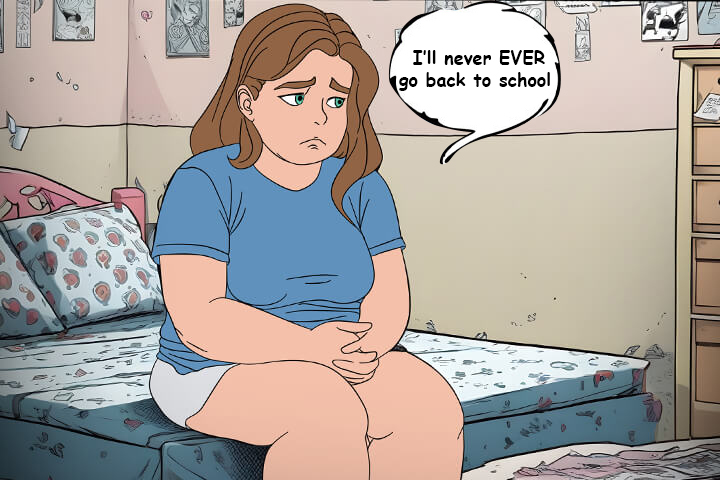
Victimisation secondaire

Souffrance ajoutée causée par une mauvaise gestion institutionnelle du harcèlement (minimisation, manque d’écoute).

Soumission sociale

Attitude de résignation face à une agression par peur de représailles ou d’exclusion.

Z

Zone of vulnerability

Emotional, social, or digital context in which a student becomes particularly exposed to violence or intimidation.

Violence verbale

Usage répété d’insultes, moqueries, menaces ou propos discriminatoires.
Victimisation secondaire

Souffrance ajoutée causée par une mauvaise gestion institutionnelle du harcèlement (minimisation, manque d’écoute).

Soumission sociale

Attitude de résignation face à une agression par peur de représailles ou d’exclusion.

After exploring our Netethic technical glossary, move on to the next step: discover the full potential of our software!

The media is talking about us